How an Epoxy Garage Floor Job Runs
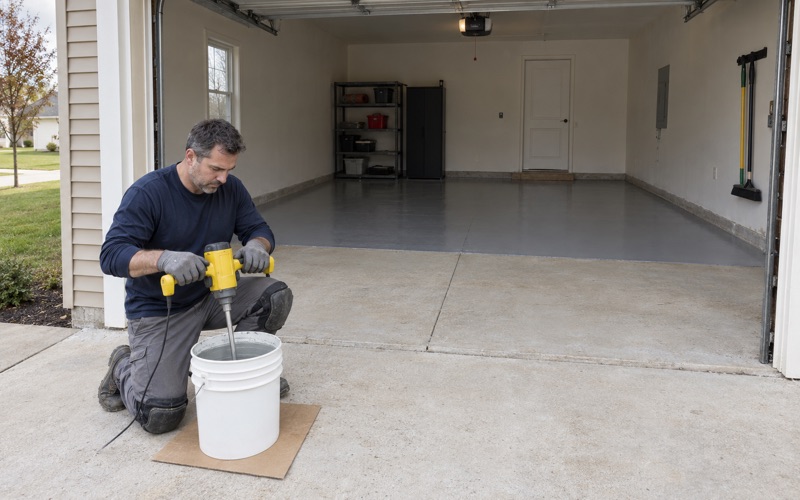
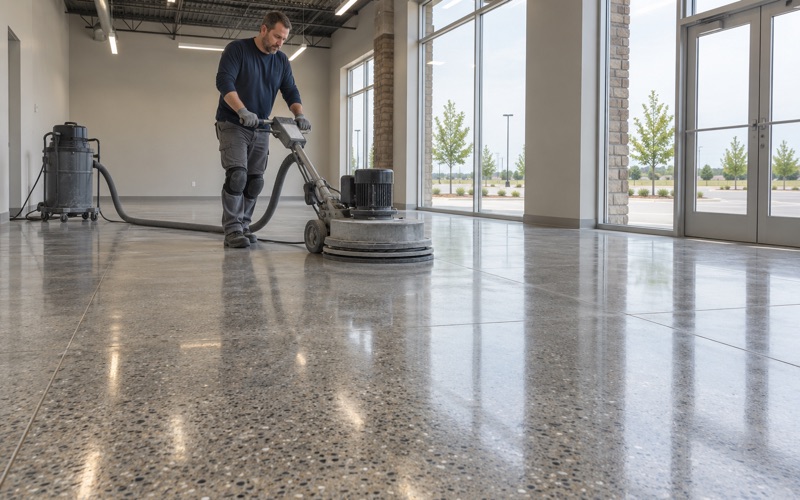
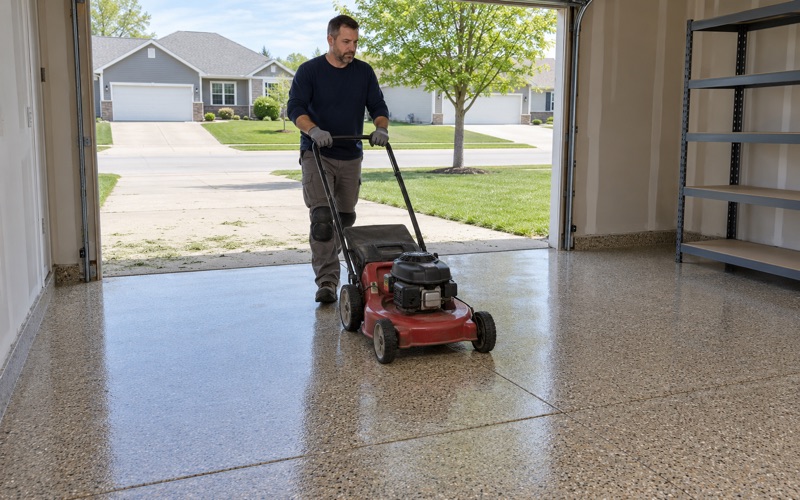
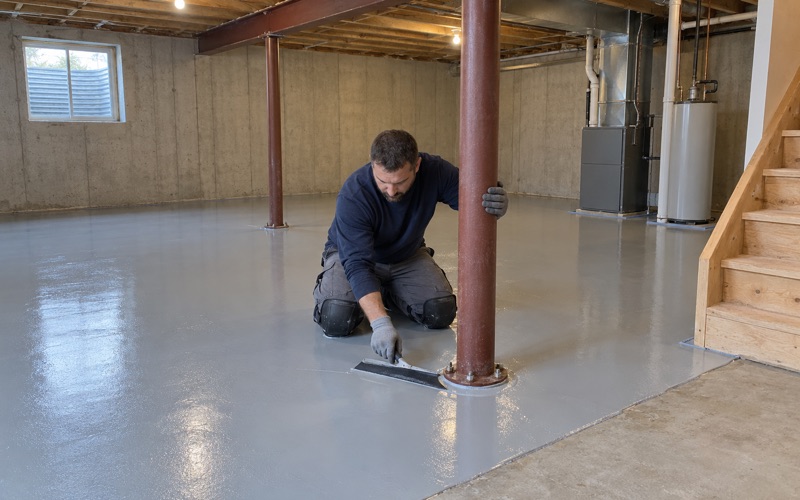
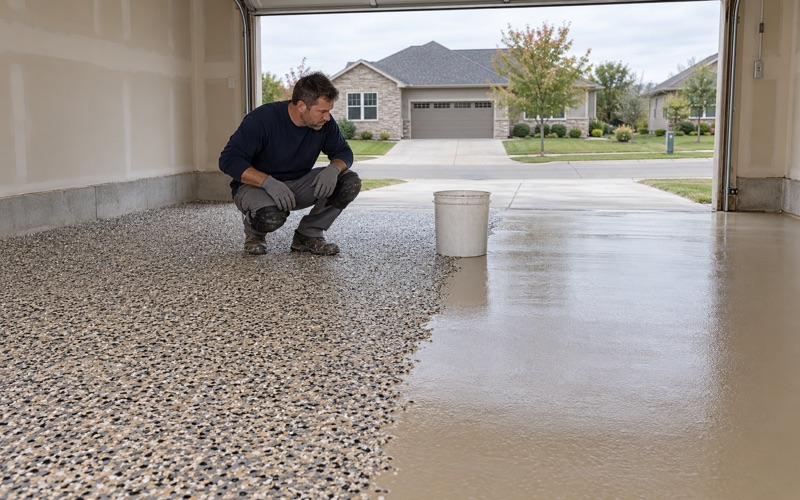
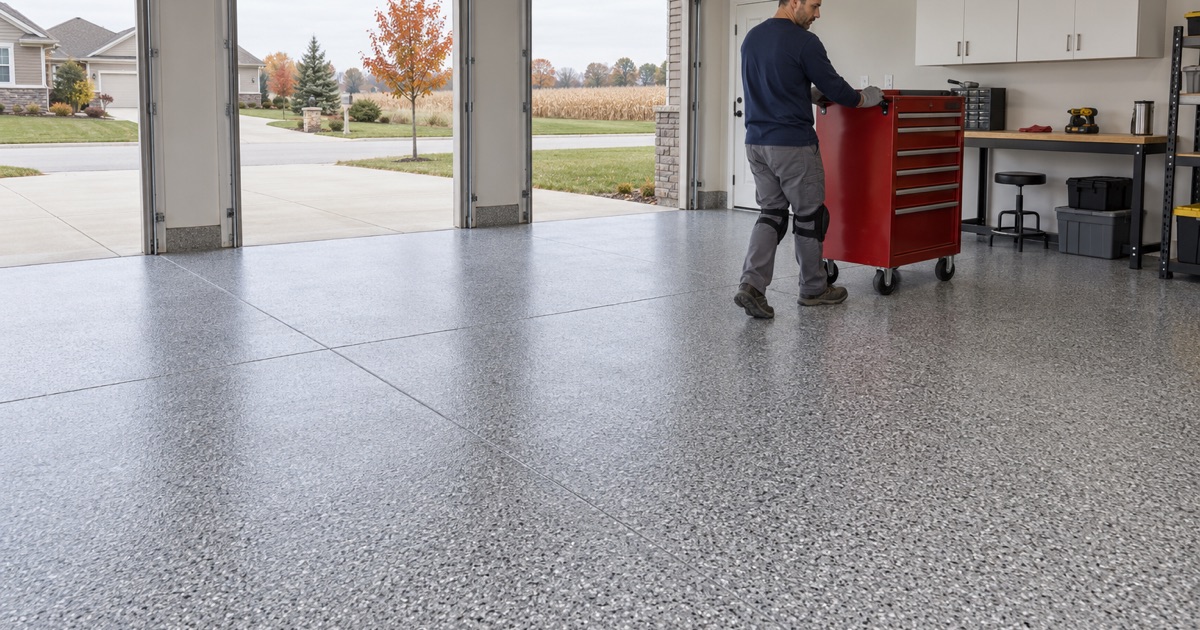
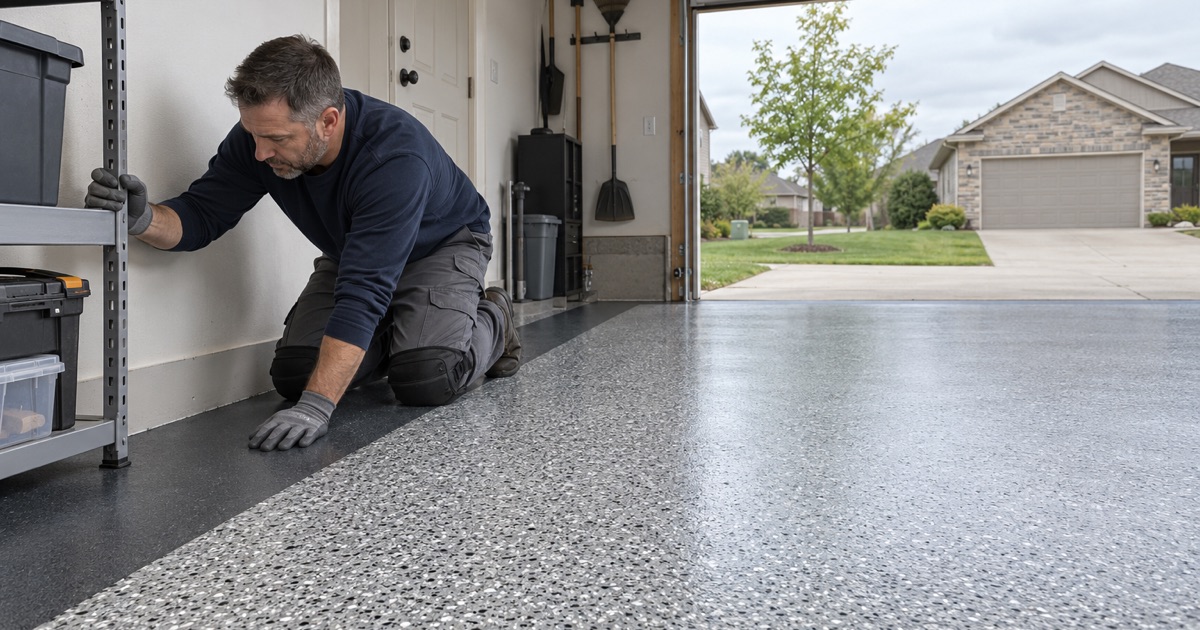
An epoxy garage floor job starts with a walk-through, a moisture test and a crack map, and the written proposal comes after those readings. Install days cover grinding, repairs, a base coat, a flake broadcast and a topcoat. You get one date for foot traffic and a later one for parking, because the coating needs time to reach full hardness before it carries a car.
Attached Garages and a Clean House
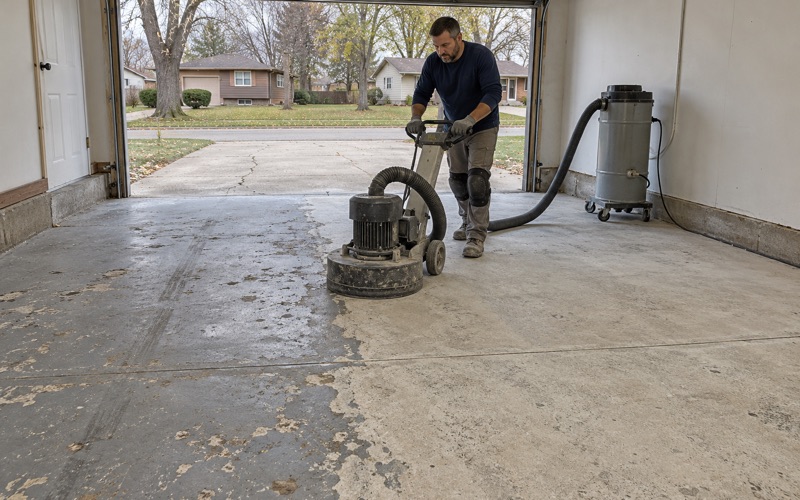
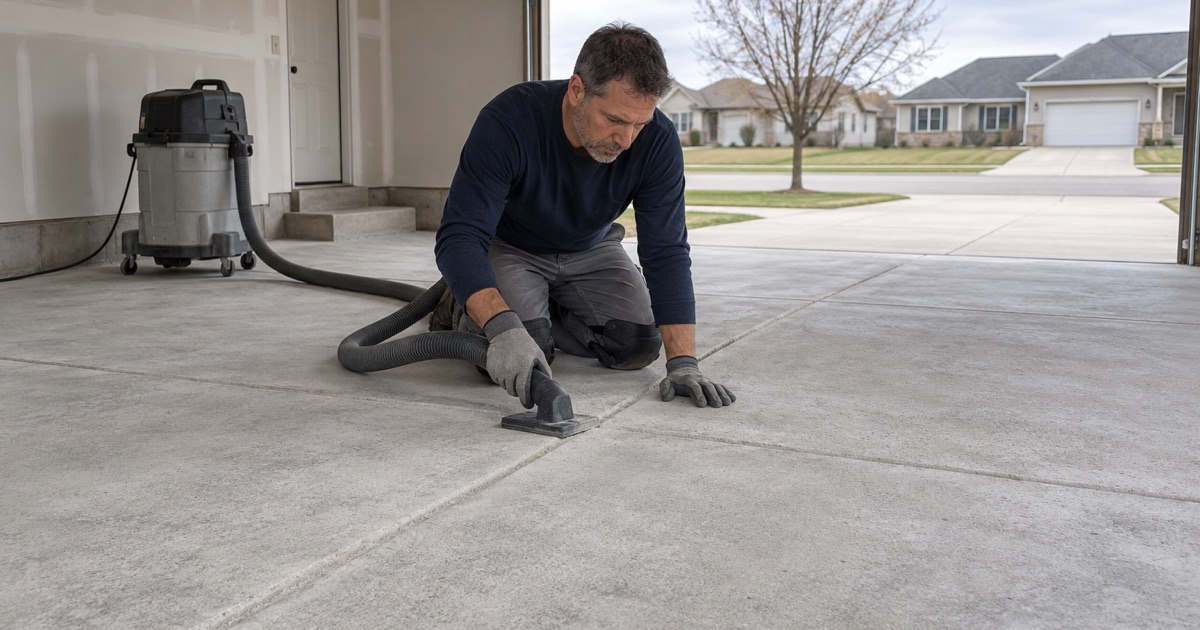
Most garages on newer Ankeny houses are attached, with a door straight into the mudroom or kitchen. We grind with a vacuum shroud at the machine so dust is captured rather than tracked inside, and we offer low-odor products for families who want to be back in the house that evening. That choice is about comfort and re-entry, since Iowa sets no rule requiring it.
Why a Newer Slab Is Not a Drier One
More than 60 percent of Ankeny’s homes were built in 2000 or later, and it is tempting to assume a young garage slab is a safe one to coat. The model residential code, under the IRC R506.2.3 exception, lets a garage slab be poured without the vapor retarder required under a living-space slab. We test the slab whatever year the house was built, rather than guess what went under it.
Moisture Testing a Garage Slab
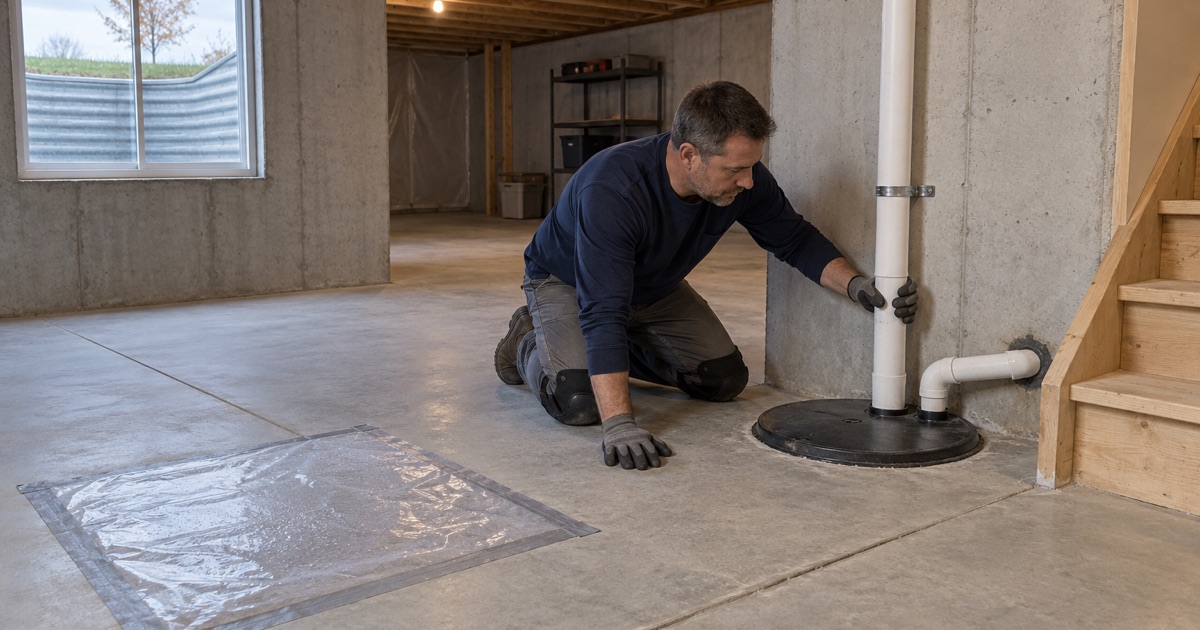
Moisture vapor moving up through concrete is the most common reason a coating blisters or lets go. We use the ASTM D4263 plastic sheet test as a quick screen, then calcium chloride kits under ASTM F1869 or in-situ relative humidity probes under ASTM F2170 when the numbers matter. The result decides the primer and the system, and it goes into the proposal.
Cracks, Spalls and When to Replace the Slab
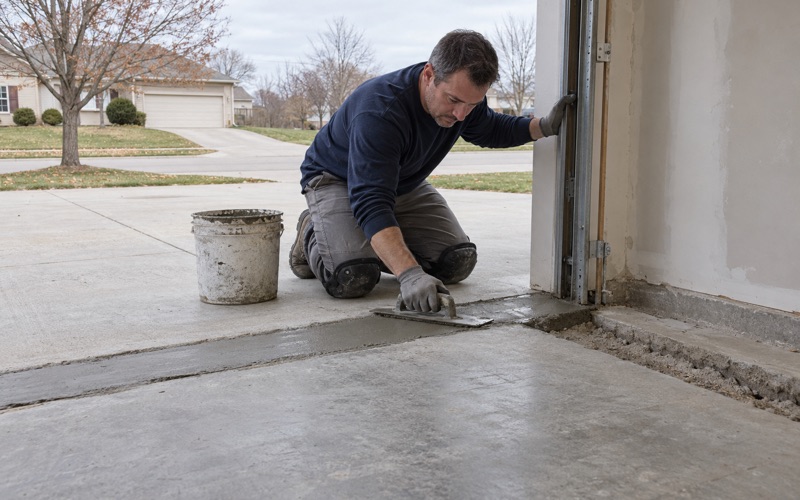
Cracks, spalls and pitting are mapped before we quote, and each is handled by type. A static hairline crack is filled and ground flush, a moving crack is detailed as a joint, and broken edges are rebuilt with repair mortar. When a slab is heaved, scaled across most of its face or broken into pieces, we say plainly that it should be replaced before anyone coats it.
Brine, Rock Salt and a Bare Slab
Bare concrete in a central Iowa garage spends the winter soaking up meltwater laced with calcium chloride and rock salt. Each freeze-thaw cycle in those saturated pores pops a little more of the surface loose, which is the flaking and scaling you see near the overhead door. A sealed, nonporous coating keeps that brine on top, where it can be squeegeed out instead of soaking in.
Cold Weather and the Unheated Garage
Epoxy and polyaspartic resins need the slab, not just the air, inside their temperature window while they cure. Federal climate normals put the area at roughly 128 to 150 nights a year at or below freezing, depending on the station, so an unheated garage between late fall and spring often cannot hold a proper cure. In that case we book a warmer stretch rather than coat a cold slab.
Hot Tire Pickup and Thin Coatings
Hot tire pickup happens when a warm tire softens a thin coating and pulls it off the floor as the car backs out. It shows up most on single-coat kits and poorly bonded films over a slab that was never ground. A properly profiled slab and a high-build system with a hard topcoat resist that heat and stay put rather than letting go in tire-shaped patches.
Store-Bought Epoxy Kits Compared With a Professional Floor
Big-box epoxy kits are mostly thin, water-based products rolled over an acid-etched slab, so the finished film is a fraction of a professional build. A 100% solids epoxy base, a full flake broadcast and a polyaspartic topcoat over a diamond-ground slab make a far thicker, harder floor. The kit costs less on day one, and the professional floor is the one still bonded after several winters.
What an Epoxy Garage Floor Costs
Garage floor pricing moves with square footage, the slab’s condition, the repair work and the system chosen. A sound two-car slab with a standard flake system is the simplest job, while heavy crack repair, old coating removal or a moisture-mitigation primer add cost. We price after the moisture test and crack map, so the number you sign reflects your slab rather than an average.