Ankeny Epoxy Flooring installs commercial epoxy flooring in Ankeny, IA, serving surrounding cities including Saylorville, Johnston, Polk City, Bondurant and Altoona. For more than 20 years we have coated floors for retail stores, offices, clinics, showrooms and service bays, where the floor has to look right on opening day and keep looking right under daily traffic.
A commercial floor job is different from a garage. The owner or facility manager has a schedule to protect, staff and customers who cannot be displaced for long, and often a written specification to meet. We plan the system, the phasing and the return-to-service times around those needs before we quote.
Every commercial proposal we write names the product line, the number of coats, the finished thickness, the surface profile and the moisture readings. That gives you a document you can check the finished floor against, and one your architect or property manager can review.
Commercial Floor Systems
High-Build Epoxy for Daily Traffic
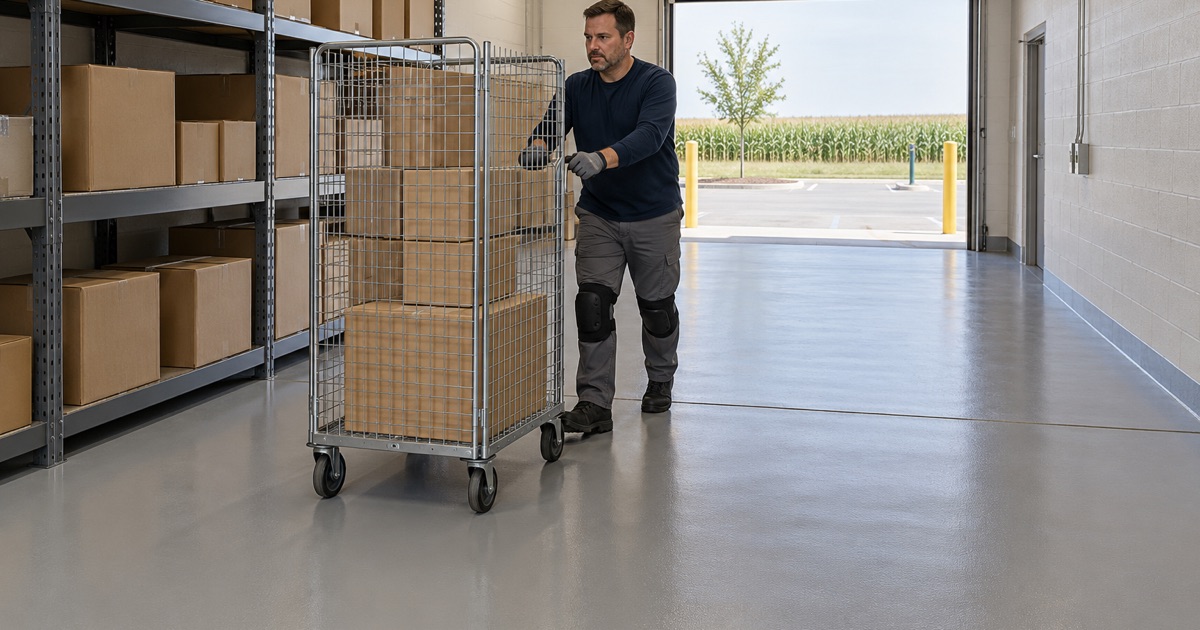
Most commercial floors start with a 100% solids epoxy system built thick enough for the traffic they carry. Foot traffic, carts, rolling racks and pallet jacks all wear a floor differently, and the build is chosen for the heaviest use the space will see.
A high-build epoxy also levels minor imperfections in the slab and gives a seamless surface with no grout lines or seams to collect dirt. That makes it easier to clean than tile and harder wearing than vinyl in most busy commercial spaces.
Flake and Quartz Broadcast Systems
Vinyl flake and quartz aggregate systems add texture, color and durability to commercial floors. Flake suits break rooms, back-of-house areas and service spaces, while quartz broadcast gives a firm, textured surface for restrooms, locker rooms and wet entries.
Both hide dirt between cleanings better than a smooth solid color. Quartz in particular holds its grip under water and cleaning chemicals, which makes it our usual pick where floors are mopped often and people walk in wet shoes.
Polyaspartic and Urethane Topcoats
The topcoat takes the wear in a commercial space. Polyaspartic topcoats cure quickly and resist yellowing under the sunlight that comes through storefront windows, while urethane topcoats add abrasion and chemical resistance in hard-working areas.
The topcoat also sets the sheen. High gloss suits showrooms and retail floors that want shine, and a satin finish hides scuffs and wear better in offices and corridors.
Spaces We Coat
Retail Stores and Showrooms
Retail floors have to look clean and finished to customers while carrying carts, displays and constant foot traffic. Solid color, flake and metallic systems all work, depending on the look of the brand and how much wear the floor will take.
Showrooms often choose a high-gloss or metallic finish that becomes part of the display. We plan those floors around fixture layouts and opening dates, so the floor is finished and cured before the merchandise goes in.
Offices, Clinics and Professional Spaces
Offices, clinics and professional suites want a floor that looks finished rather than industrial and is easy to clean and disinfect. Seamless epoxy and polyaspartic systems give a smooth, nonporous surface without seams where dirt and germs can collect.
In occupied buildings we use low-odor products where staff and patients are nearby, and we work in sections or after hours. Transitions to carpet, tile and other flooring are planned so the coated areas meet them cleanly.
Auto Dealerships and Service Bays
Dealership service bays and auto repair shops see hot tires, oil, brake fluid, antifreeze and road salt carried in from Iowa winters. High-build epoxy with a chemical-resistant urethane or polyaspartic topcoat holds up to that mix and cleans easily.
We plan around bay schedules, coating some bays while others stay in service. Line striping and a light texture are added where technicians walk around lifts and floor jacks.
Slab Conditions in Commercial Buildings
Removing Old Flooring and Adhesives
Many commercial floors we coat were once covered in vinyl tile, carpet or sheet goods. All of the flooring, adhesive and leveling compound has to come off so the coating bonds directly to concrete, and we grind it away to sound slab.
In older buildings we ask about the age of the flooring and adhesive before removal, because some older materials contain asbestos and need testing first. That question is part of every walk-through on a renovation.
Moisture Under a Covered Slab
A slab that has been under carpet or vinyl for years can carry moisture that never had a chance to escape. When the covering comes off, that moisture is the main risk to a new coating.
We test with calcium chloride kits under ASTM F1869 or relative humidity probes under ASTM F2170 after removal and before pricing the system. High readings call for a moisture-mitigation primer, and we explain up front that moisture is the first thing a coating warranty excludes.
Cracks, Joints and Transitions
Commercial slabs have control joints, cracks and transitions to doorways and other flooring. We map them before quoting, fill static cracks, honor moving joints and rebuild damaged joint edges so they do not chip under carts.
Where the coating meets another floor, at a door threshold or a carpeted office, we finish the edge with a clean termination so there is no lip to catch a cart wheel or a shoe.
Scheduling, Odor and Texture
Most businesses cannot close for a floor, so we phase the work around shifts with overnight and weekend windows, and we sequence areas so entrances and key spaces reopen first. Low-odor and 100% solids products help in occupied buildings, and while the federal 40 CFR 59 Subpart D rule sets VOC limits for floor coatings at the manufacturer level, comfort for your staff is a separate question we plan for.
Slip resistance is specified, not promised. We choose the broadcast and the topcoat texture for each area, with more grip in entries, restrooms and wet zones, and we name that texture in the proposal.
- 20+ Years on Concrete
- Moisture Tested Before Pricing
- Ground, Never Acid Etched