Ankeny Epoxy Flooring installs metallic epoxy floors in Ankeny, IA, serving surrounding cities including Saylorville, Johnston, Polk City, Bondurant and Altoona. A metallic floor is the most hand-crafted system we install, and after 20+ years of preparing and coating concrete we know it is also the least forgiving of a poorly prepared slab.
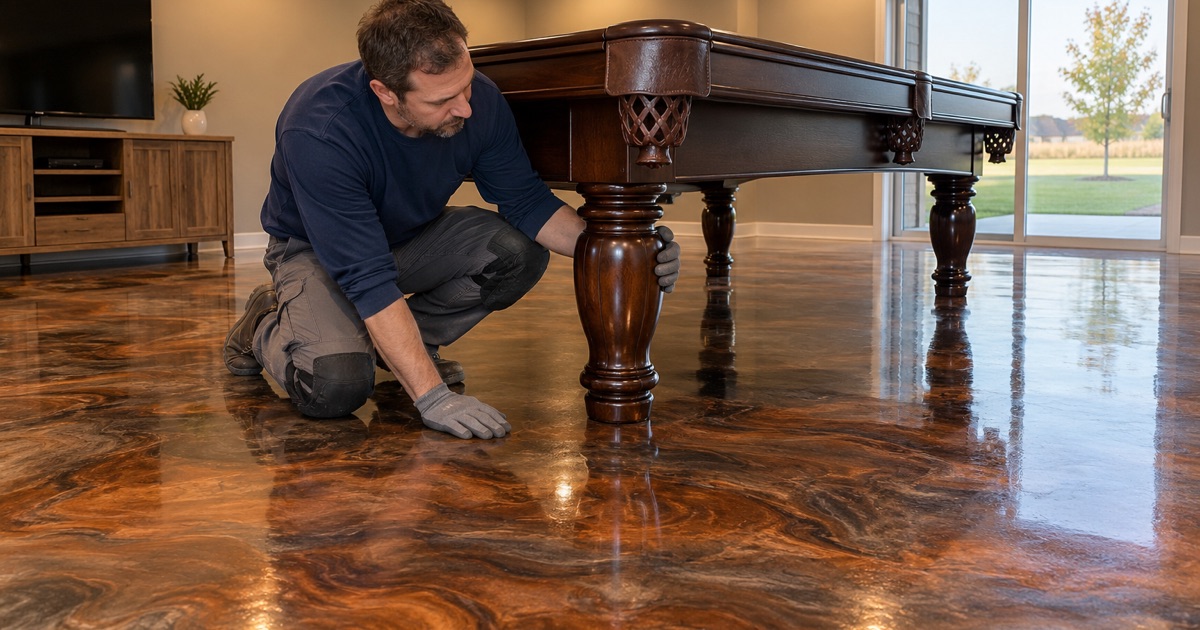
Metallic epoxy uses fine pearlescent and metallic pigments suspended in a clear resin. As the material is spread and worked, the pigments move and settle, creating swirls, veins and depth that look like marble, polished stone or flowing water. No two floors come out the same, and that individuality is why people choose them.
Because the finish is glossy and clear, it shows every flaw underneath it. Our metallic proposals spell out the grinding, the repairs, the moisture reading, the product line, each coat and the finished thickness, so the preparation is as visible on paper as the finish will be on the floor.
How a Metallic Floor Is Built
Primer and Tinted Base Coat
The system starts on a diamond-ground slab with a primer that soaks into the concrete and locks the floor in place. Over the primer goes a tinted base coat, usually in a color chosen to support the metallic layer and deepen the finished look.
The base coat also gives the metallic layer an even surface to flow across. Any pinholes, ridges or contamination in the slab show up at this stage, and we fix them here rather than let them surface in the decorative coat.
The Metallic Layer
The metallic coat is a 100% solids epoxy mixed with pigments, poured and spread across the floor. While it is wet, the installer moves it with rollers, trowels, brushes or air to create the pattern you selected.
This is where experience shows. The material has a limited working time, and the pattern has to be built evenly across the whole floor, room by room, without visible starts and stops. Seams between pours and doorways are planned before the first bucket is mixed.
A Clear, UV-Stable Topcoat
Epoxy can yellow under sunlight, which would dull the colors in a metallic floor. We finish with a clear polyaspartic or aliphatic urethane topcoat that resists ultraviolet light and abrasion, protecting the metallic layer from wear and fading.
The topcoat also sets the sheen and the texture. A high gloss gives the most depth, a satin finish hides fine scratches better, and a fine anti-slip additive can be mixed in for rooms that may get wet.
Designing the Look
Colors and Combinations
Metallic floors can be a single color with subtle movement or several colors working together. Grays, silvers and charcoals give a polished-stone look, warm coppers and bronzes suit bars and entertainment rooms, and deeper blues and greens make a bolder statement.
We bring physical samples and show how different base colors change the same metallic. Looking at samples under the lighting in your own room matters, because a metallic floor shifts in color as you move across it.
Movement and Patterns
The way the material is worked creates the pattern. Tight veining resembles marble, long sweeps look like flowing water, and broad, soft movement reads like a polished stone slab. Some customers want a calm floor with gentle movement, and others want dramatic swirls.
We talk through the level of movement you want and show examples before installation. During the job the installer follows that direction while letting the material do what it naturally does, which is where each floor gets its individual character.
Setting Expectations
A metallic floor will not look exactly like a photo or a sample board, because the pattern is formed live and the pigments settle on their own as the resin levels. That variation is part of the finish, not a defect.
We want you to choose a metallic knowing that. If you need a floor that matches a sample precisely, a solid color or flake system is a better fit, and we will tell you so instead of overselling the metallic.
The Slab Matters More Than Usual
Grinding and Flatness
A metallic coat is self-leveling and glossy, so any dip, ridge or grinder mark in the slab shows through as a change in the pattern or a reflection. We diamond grind the slab to the profile the system needs and check for low spots and high spots before the primer goes down.
Grinding dust is captured at the machine with a vacuum, which matters in a finished basement or an occupied building. Any fine dust left on the floor would be trapped in a clear coat, so we clean thoroughly between every step.
Moisture Testing Under a Clear Floor
Moisture vapor coming through a slab can cause blisters, cloudiness and bond loss, and on a glossy metallic floor those defects are impossible to hide. We test every slab with calcium chloride kits under ASTM F1869 or relative humidity probes under ASTM F2170 before we price the job.
In basements we also check the sump pit and drain tile and look for signs of past water. When the readings are high, a moisture-mitigation primer goes under the system, and we explain that moisture is the first thing a coating warranty excludes.
Cracks, Joints and Old Patches
Cracks and control joints tend to telegraph through a metallic floor as lines in the pattern. Static cracks are filled and ground flush, and old patches are blended, but some may still show faintly through the finish.
A crack that is still moving will reappear in the floor no matter how it is filled. We map cracks and joints before quoting and tell you which ones may show, so you can decide whether to honor a joint as a design line or choose a different system.
Residential and Commercial Metallic Epoxy Floors
Finished Basements, Bars and Home Theaters
Finished basements are one of the best places for a metallic floor. The light is controlled, there is no road salt or hot tire traffic, and the floor becomes part of the room’s design. Basement bars, game rooms and home theaters all suit the depth and gloss of a metallic finish.
Low-odor products are available for basements and are worth considering when the family will be home during the job. That is a comfort and re-entry choice, not a legal requirement.
Why Garages Are a Harder Fit
A metallic floor can be installed in a garage, but it is a hard environment for one. Brine, rock salt and grit come in on tires every winter, and hot tires can mark the surface in summer. The gloss that makes a metallic beautiful also shows every scratch from that traffic.
For most garages we recommend a flake system with a tough topcoat instead. If you want a metallic in a garage used more as a showroom or workshop, we talk through a harder topcoat, a satin sheen and the upkeep it will need.
Showrooms, Offices and Retail
In showrooms, offices, salons and retail spaces, a metallic floor creates a finished, upscale look that makes an impression on customers walking in. It is seamless and easy to clean, without the grout lines of tile.
Commercial metallic floors get a harder topcoat for foot traffic and carts, and we specify texture where entries may get wet. We phase the work around business hours, with overnight and weekend windows when a space cannot close, because each layer needs undisturbed time to cure.
- 20+ Years on Concrete
- Moisture Tested Before Pricing
- Ground, Never Acid Etched